Your next air conditioner could heat your home, too. A suitable heat pump provides summer cooling and electric heating from the same equipment. For a Lethbridge home, the useful starting point is how it fits your cooling needs, existing furnace and winter heating plan.
What Does a Heat Pump Do?
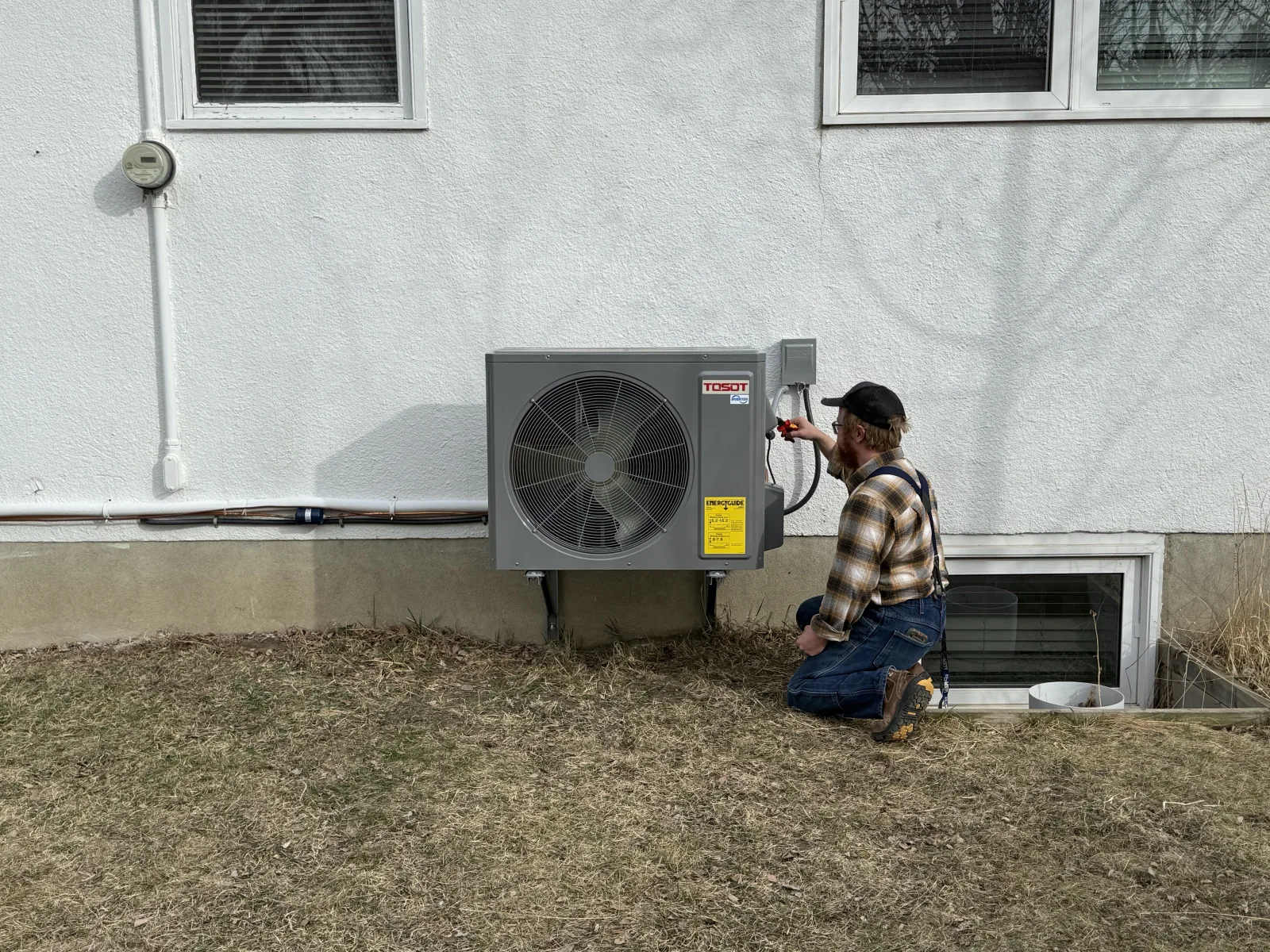
In cooling mode, an air-source heat pump moves indoor heat outside, much like a conventional air conditioner. In heating mode, it reverses the process and moves heat into the home. One system can work through both seasons, with capacity and controls selected for the home.
Cold-climate models are designed for lower outdoor temperatures. Their suitability still depends on the home's heat loss and the proposed equipment combination. Natural Resources Canada explains heat-pump operation and sizing.
Replacing Your Central AC? Compare a Heat Pump
When an air conditioner needs replacing, compare a conventional AC with a heat pump. Both can supply summer cooling; a heat pump also gives the home an electric heating option.
That comparison should include cooling demand, electrical capacity, ductwork, controls and the existing furnace. Installing a heat pump does not automatically mean removing a working furnace. Our heat-pump installation page explains the assessment and installation options.
Heat Pump Plus Gas Furnace: the Dual-Fuel Option
A dual-fuel system pairs a heat pump with a compatible gas furnace. The controls select the heat source as conditions change. It can suit a Southern Alberta home that needs summer cooling and wants to use electric heating through milder weather while retaining gas heat for colder conditions.
There is no single changeover temperature that suits every home. The home's heat loss, available heating capacity, equipment controls and energy prices all affect how the system should operate. The outdoor unit, indoor equipment and furnace also need to be compatible.
We can assess Panasonic cold-climate heat pumps paired with Trane furnaces and Trane heat-pump options. Model numbers are a starting point for a quote; the equipment installed must match the proposed system.
Have Solar? Consider Where Your Electricity Goes
Your solar generation can help supply a heat pump's electricity for cooling and heating during milder winter weather. When heat-pump heating replaces heat that would otherwise come from the gas furnace, it reduces natural-gas use.
Generation and heating demand do not always line up. Season, weather, time of day, the home's heat loss and the controls affect how much electricity can come from your panels. Compare actual generation, consumption and energy costs rather than assuming a particular saving.
Will a Heat Pump Lower My Heating Bills?
That needs a home-specific comparison. A natural-gas household may not see lower heating bills after adding a heat pump. Installation costs, electricity and gas prices, equipment performance, and the value of adding summer cooling all belong in the discussion.
A useful proposal explains the home's heating and cooling needs, the equipment combination, how the controls will operate, and the full installed price. An equipment upgrade and a rebate are separate decisions.
What About the Federal Heat Pump Rebate?
We keep the changing program details in a separate Alberta heat-pump rebate guide. It covers the announced amounts, income thresholds, application timing and the whole-home heating question. Choosing equipment that suits the home does not automatically establish rebate eligibility.
Plan the Installation Around Your Home
- Your goal: replace aging AC, add cooling, improve comfort or compare heating options.
- The home: heat loss, cooling demand, existing ducts and electrical capacity.
- The equipment: compatible indoor and outdoor units, furnace, controls and any required accessories.
- The project: equipment, related duct or electrical work, controls and the full installed price.
Customer financing is available through EMCO. Our ongoing Trane x Reid Pro offer includes a free ecobee smart thermostat with the purchase and professional installation of a Trane furnace, AC or heat pump. Ask the team about equipment and control compatibility when discussing your quote.
Heat Pump Questions
Can a heat pump replace my central air conditioner?
A suitable air-source heat pump can provide summer cooling in place of a conventional central AC and also provide heating. The home's needs, ductwork, furnace and controls affect the equipment choice.
Can I keep a gas furnace with a heat pump?
A suitable dual-fuel installation combines a heat pump with a compatible gas furnace. Heating needs, equipment capacity and controls determine how the two work together.
Will a heat pump guarantee lower bills?
No. Compare the home's needs, electricity and gas costs, equipment performance and installation price. A gas-heated household may not see lower heating bills.
Can my solar panels supply a heat pump?
Solar generation can supply part of the electricity used by a heat pump. The amount depends on generation, demand, season, weather and controls.